
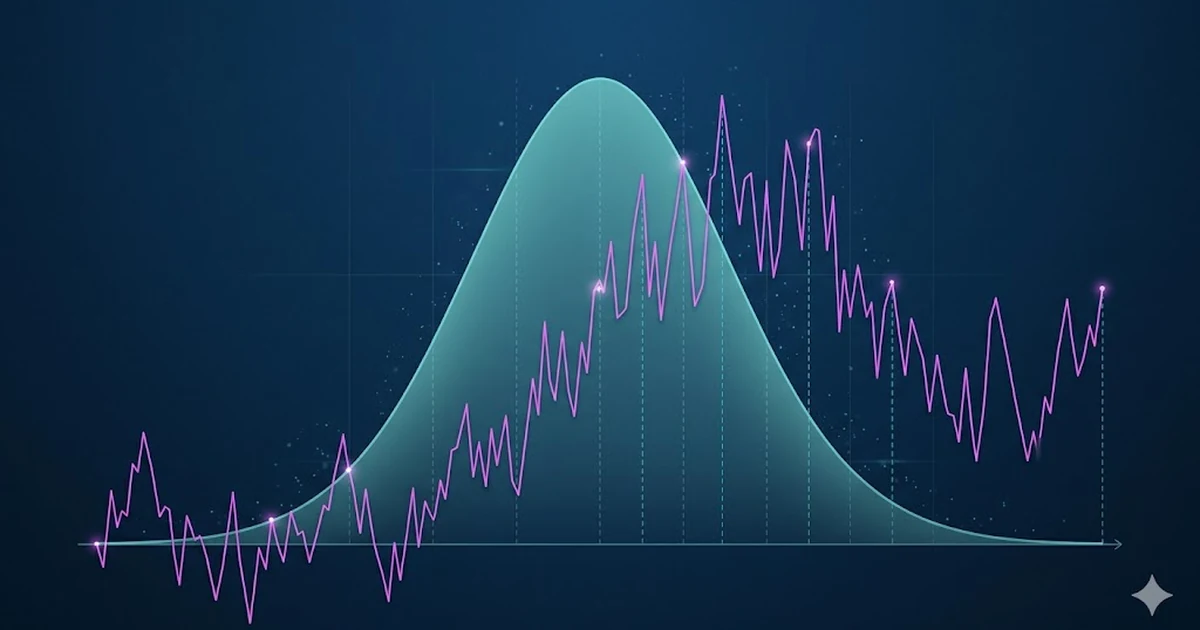
A positive expected value (+EV) bet is defined by long-run math: over many similar opportunities, the bet should earn profit. In the short run, outcomes are driven by variance—the natural ups and downs of random results.
Understanding variance is what separates sustainable betting discipline from emotional decision-making after a bad week.
What Is Variance?
In plain terms, variance measures how spread out results are around an average. In sports betting:
- A coin-flip style proposition has high short-run volatility—you can easily lose several flips in a row by chance.
- Even a 60% true-win-rate bet will lose 40% of the time on any single trial.
So “I lost, therefore I was wrong” is not always valid. Conversely, “I won, therefore I was sharp” is equally unreliable over small samples.
Expected Value vs Short-Term Outcomes
Expected value answers: “If I could place this bet thousands of times at the same odds and conditions, what would my average profit per dollar risked be?”
Realized results over 10 or 50 bets are dominated by luck. That gap is variance.
A simple intuition
Imagine betting $100 on fair dice where you truly have a 55% edge. You should still expect losing streaks that feel awful—because each bet is an independent draw from a random process.
Why Sample Size Matters
The more independent bets you track (especially when edge is modest), the closer your realized ROI should drift toward your theoretical EV—if your edge estimates were accurate.
Rules of thumb serious bettors use:
- Treat single outcomes as information-poor.
- Evaluate process (CLV, model calibration, line shopping) alongside ROI.
- Avoid changing strategy after every slump unless you identify a concrete flaw.
Bankroll Swings and Emotional Risk
Variance is why bankroll management exists. Betting too large relative to edge increases the risk of ruin during normal cold streaks.
If you have not read them yet, pair this article with our other posts on bankroll management and expected value betting—together they frame how much to bet and why patience is mathematically required.
Variance in Props vs Main Markets
Player props can have higher perceived volatility because outcomes depend on minutes, matchup, and game script. That does not automatically make them “worse” bets—it means your process should account for:
- Injury and lineup uncertainty
- Smaller historical samples for niche markets
- Different closing-line behavior than NFL sides
Data tools that aggregate trends—like PropFinder—help ground decisions in context rather than one-off hunches.
Related guides
Frequently Asked Questions
How many bets until variance “smooths out”?
There is no universal number. Thinner edges and higher odds require larger samples than chunky favorites. Focus on continuous improvement and accurate logging rather than a magic count.
Is variance the same as bad luck?
Colloquially, people say “variance” for bad luck. Statistically, variance includes good luck too—winning above expectation.
Can I reduce variance?
Lower bet sizes, avoid overly correlated parlays, and choose markets where you can defend your probability estimates. You cannot eliminate randomness from uncertain events.
Does live betting change variance?
It changes price and information, not the existence of randomness. Live markets can be more volatile and more book-dependent—line shopping still applies.
Play within your means. For responsible gaming support, visit American Gaming Association Responsible Gaming.